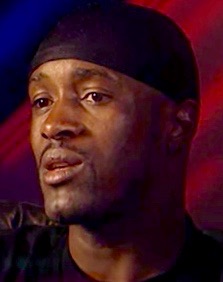
In the spring and summer of 1996, a series of sexual assaults occurred in the River Park neighborhood of South Bend, Indiana. South Bend police interviewed victims and witnesses, but because the attacks occurred at night, no one had clearly seen the attacker’s face.
The police put together a task force to investigate the assaults. Police created a composite sketch of a young Black male as a possible suspect. Officers were told the suspect might be traveling around the River Park neighborhood on a bicycle.
In the early morning of July 24, 1996, 29-year-old Richard Alexander was riding his bicycle through the River Park neighborhood when he was stopped by police because he met the general description of the suspect. Alexander denied any connection with the sexual assaults.
The officers photographed Alexander and his bicycle and obtained blood and hair samples before releasing him. The police later stopped at least two other Black men in the River Park neighborhood, one of whom was riding a bicycle, in connection with the assaults but did not charge anyone with the crimes.
The police showed victims and witnesses several photographic lineups. The police asked three of the victims to look at either Alexander’s photo or a photographic lineup containing his photo. No one identified him, including one victim who had been face-to-face with her attacker. She said it was dark and her attacker wore a hood.
Two witnesses, however, identified Alexander in the photographic lineups. One witness, Sylvia Agnone, had witnessed an attack in late May 1996 from her apartment. In early June, an officer showed her two photo lineups. Agnone picked out a man named Jeffrey Garza in one of the lineups, saying that she was 70 percent sure he was the perpetrator. After police had stopped Alexander in late July, they showed Agnone a photographic lineup that included Alexander’s picture. Agnone did not identify anyone.
In August 1996, Agnone viewed a third photographic lineup that again included Alexander. She picked Alexander and said she was sure that he was the attacker because of his facial features, although she had never before described the attacker’s facial features to the police.
Police also asked Michael Ditsch, who was the fiancé of one of the victims, if he could identify the attacker. Ditsch had been with his fiancée the night she was assaulted. Ditsch had been approached from behind by the attacker, frisked and forced to lie on the ground. During the commotion, his glasses had been knocked off.
Shortly after the attack, Ditsch had described the assailant to police as a dark-skinned Black man about 5 feet 9 inches tall with a long face, no facial hair, and wearing a hood.
The police showed Ditsch a 1991 mug shot of Alexander, and he identified Alexander as the attacker.
On August 29, 1996, police arrested Alexander and put him in a lineup with five other men. Several of the men in the lineup did not match certain aspects of descriptions given by witnesses. All were Black, but their heights, builds, and hairstyles were somewhat different, and two wore different-colored shirts from the rest. The men in the lineup were asked to repeat several phrases that the attacker had used. Nine of the victims and witnesses viewed the lineup together. Several identified Alexander.
Alexander was charged with two counts of robbery, two counts of deviate conduct, two counts of confinement, two counts of attempted rape and one count each of rape, burglary, attempted robbery and auto theft. The charges involved a sexual assault on May 7 in the 500 block of South 28 th Street; on an attempted sexual assault on May 28 in the 400 block of South 26 th Street; a sexual assault on July 17 in the 2600 block of East Colfax Avenue, and an assault and burglary on August 7 in the 300 block of Eunice Street.
Prior to trial, the prosecution dismissed the charges for the July 17 attack after DNA testing excluded Alexander.
In June 1997, Alexander went to trial in St. Joseph County Superior Court. On June 12, after seven hours of deliberations, a mistrial was declared when the jury was unable to reach any verdicts.
In February 1998, he went to trial for a second time in St. Joseph County Superior Court.
The victim in the May 7 crime, a 37-year-old woman, said she arrived at a home where she was house-sitting and a man stepped out of a closet and demanded money. She tried to flee, but the man had a knife and forced her to perform oral sex. She identified Alexander as her attacker.
A 26-year-old woman described how she was attacked on May 28, 1996, as she was putting her nephew into her truck after picking him up from a babysitter. She said she gave the assailant $10, but he demanded more and forced her at gunpoint to the backyard of a nearby duplex, where he beat her when she refused to perform oral sex. She identified Alexander by the way he said the word “bitch” during the lineup. She said he used the word repeatedly during the attack.
Agnone testified and identified Alexander as the man she saw during that attack. She said she saw the attacker as he passed by her bedroom window three feet away from her.
The 47-year-old victim in the August 7, 1996 crime also testified that she identified Alexander by the way he said the word “bitch.” The defense presented evidence that a hair found in the victim’s home was from a Black man, but that Alexander was excluded.
The defense was allowed to present evidence that Alexander had been excluded from the July 17, 1996 attack. In addition, he had been falsely identified as the man who attacked a 75-year-old woman on March 19, 1997. The woman had identified Alexander after police mistakenly put his photograph into a photographic lineup. The identification was a mistake—Alexander was in jail on the day of the attack.
On February 12, 1998, the jury convicted Alexander of the robbery and criminal deviate conduct charges for the May 28, 1996 crime. The jury also convicted him of attempted rape, burglary and car theft in the August 7, 1996 attack. He was acquitted of the May 7, 1996 attack.
On March 3, 1998, Judge Sanford Brook sentenced Alexander to 70 years in prison.
In December 1998, the Indiana Court of Appeals upheld Alexander’s convictions and sentence.
In March 2001, Mark Williams was convicted of the July 17, 1996 crime—the case in which DNA testing had excluded Alexander prior to his trial. The DNA was linked to Williams. He was sentenced to 40 years in prison.
That same year, another man, Michael Murphy, who was facing charges of attempted child molesting and residential burglary, was released on bond and two weeks later was arrested for five more burglaries. During an interrogation, Murphy admitted that he had committed the August 7, 1996 crime.
Subsequently, the rape kit in that case was sent to ReliaGene Technologies in New Orleans, Louisiana, for mitochondrial DNA testing on hair from the rape kit. Alexander was excluded as the source of the hair.
With the exclusion and the similarities in the attacks, the prosecution concluded that Alexander was innocent of all of the crimes for which he had been charged.
On December 12, 2001, all of Alexander’s convictions were vacated, the charges were dismissed and he was released.
Alexander filed a federal wrongful conviction lawsuit against the City of South Bend, but the case was dismissed. He subsequently filed a claim for compensation from the state of Indiana and in 2022 was awarded $189,000. However, because Alexander had subsequently been convicted of voluntary manslaughter and sentenced to 50 years in prison, the compensation statute did not allow the money to be dispersed while he was incarcerated.
– Maurice Possley
Posting Date: 08-29-2011
Last Update Date: 03-20-2026