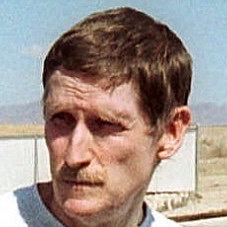
At about 8:20 a.m., on February 24, 1982, 9-year-old Daralyn Johnson left her home on Greenleaf Avenue in Nampa, Idaho, to make the six-block walk to Lincoln Elementary School. At 4 p.m., when a friend who usually walked home with Daralyn came to the Johnson home asking if Daralyn could come out to play, Daralyn’s mother, Deanna Johnson, called the school and learned that Daralyn had never arrived.
Three days later, fishermen discovered the girl’s body in a small creek near the Snake River at Walters Ferry, about 15 miles south of Nampa. An autopsy determined she had been sexually assaulted, knocked unconscious by a blow to the head and drowned in the creek.
The police investigation involved, in part, collecting hair samples from numerous men in the area.
More than a year later, on March 7, 1983, police questioned 35-year-old Charles Fain. His hair was similar to hair found on the child’s body and he owned a car similar to one seen near where police believed that the girl had been abducted. In addition, Fain lived a block away from the Johnson family, although he had not moved there until seven months after the murder.
Fain denied any involvement in the crimes and passed a polygraph test.
Later that day, he was arrested and charged with first-degree murder, first-degree kidnapping and lewd and lascivious conduct with a minor.
In October 1983, Fain went to trial in the Third District Judicial District Court in Canyon County, Idaho.
FBI agent Douglas Deedrick, an analyst in the agency’s microscopic hair analysis unit, testified that he had compared strands of hair found on the girl’s body with Fain’s hair. “Based upon the appearance and different characteristics, it was my conclusion that the two hairs could have originated from Charles Fain,” the agent testified.
Deedrick conceded that point-by-point comparisons could not be made as with fingerprints but said that human hair had many characteristics that allowed analysts to make comparisons. He said he was confident that the hairs, which had been found in the underwear and socks of the victim, came from Fain. “They appeared alike enough for me to draw that conclusion,” Deedrick testified.
FBI Agent Robert Hallett testified that he compared Fain’s left shoe to shoeprints found in the mud where the girl’s body was found. He said the make of the shoeprint was consistent with Fain’s shoe. He said it was “possible that this shoe made this impression.” He added that although it was a common type of boat shoe sole, the wear patterns on the shoe individualized the print.
The prosecutor asked, “[I]f I understand correctly, that you said if another shoe made the impression, it would have to have the same characteristics as the actual left shoe that we have here?”
“That's correct, sir,” Hallett said.
“What are those characteristics?” the prosecutor asked.
“The same size, the same design, and having general wear in exactly the same locations,” Hallett said. He added that the wear characteristics would be “the result of the same characteristic walk as the individual who owned those shoes … I found, therefore, that the shoe which made this impression, and this left shoe had sustained wear in the same area. To a shoeprint examiner, this would indicate that the individual who walked with these shoes has the same walking gait.”
A former Canyon County detective testified that swabbings taken from the girl’s body during the autopsy had been discarded by Dr. Kenneth Droulard, the pathologist who conducted the autopsy.
A 12-year-old girl testified at the preliminary hearing that she saw a car resembling Fain’s car stop by Daralyn as she walked to school. The girl had testified at Fain’s preliminary hearing that she saw the car make a U-turn and that she believed Daralyn was in the car. However, at the trial, she said she only saw one person, the driver, in the car. She said the man had a beard and long hair, which resembled Fain at the time of the crime.
Two jailhouse informants, Bobby Roberson and Ricky Chilton, who shared a jail cell with Fain, testified that they had heard him admit to committing the crime. Both received reduced sentences in exchange for their testimony, although Chilton’s deal was not disclosed to the defense at the time of the trial.
When he testified, Chilton had been facing charges of fraud, escape, armed robbery and kidnapping at the time which carried a possible sentence of 230 years. Chilton said he was testifying voluntarily with no agreement. However, after testifying he pled guilty, got a substantially reduced sentence and was released after three years. He would later assert that the prosecution “had conspired to force him into testifying" and that the prosecutor's office made death threats against him.
John Thompson, an acquaintance of Fain’s, testified that at one point prior to his arrest, Fain said, “What would you say if I told you I killed someone?”
Fain denied committing the crime. He testified that he was 360 miles away in Redmond, Oregon, at the time of the crime. Other witnesses corroborated that testimony. Judge James Doolittle denied a defense motion to introduce the conclusion of the polygraphy examiner that Fain was “telling substantially the truth” when he denied involvement in the crime.
On November 4, 1983, Fain was convicted of all the charges. In March of 1984, he was sentenced to death.
Fain appealed to the Idaho Supreme Court, which ordered Judge Doolittle to hold a special hearing to investigate the destruction of the swabbings of semen taken from the victim’s body. The judge, however, found that the samples had been destroyed in good faith. In 1989, the Idaho Supreme Court upheld Fain’s convictions, but ordered the judge to hold a new sentencing hearing. The judge once again sentenced Fain to death, and in 1991, the Idaho Supreme Court affirmed the decision.
In 1993, Fain’s lawyers filed a federal petition for a writ of habeas corpus. Five years later, in August 1998, Fain’s legal team filed a motion for mitochondrial DNA testing of the hairs, which was not available at the time of the crime. In November 1998, U.S. District Judge B. Lynn Winmill granted the request.
In June 2001, The Bode Technology Group reported that it had tested two of the hairs recovered from the victim’s body and that Fain was excluded as the source of the hairs. On July 6, 2001, Judge Winmill granted the habeas petition, vacated Fain’s convictions and gave the prosecution 60 days to retry Fain or dismiss the charges.
The prosecution did not seek a retrial. The charges were dismissed and Fain was released on August 23, 2001.
In May 2020, the Canyon County Prosecutor's Office said that DNA testing implicated David Dalrymple, who was serving a sentence of 20 years to life for sexual assault of a minor in 2004, as the real perpetrator.
In 2021, Fain was granted a certificate of innocence from the state of Idaho, and later that year received $1,385,963 in compensation for his wrongful conviction.
In January 2022, Dalrymple was charged with rape and murder. In June 2024, he was convicted of rape and murder. Subsequently, Dalrymple was sentenced to two consecutive terms of life in prison without parole.
– Maurice Possley
Posting Date: 08-29-2011
Last Update Date: 01-28-2026