On July 22, 2017, a white man walked out of a Walmart store on Bandera Road in San Antonio, Texas without paying for a backpack that he had filled with merchandise and stolen from the store. David Gamez, a loss prevention officer who had been following the man and watching him, gave chase. Surveillance video showed Gamez wrestling the backpack off the man who then sliced Gamez with a box cutter or knife, before running off in the direction of a homeless camp near the store.
Surveillance video inside the store showed the man from the rear. A cup the man was drinking from was recovered from a trash can. Efforts to lift fingerprints from the backpack and the cup were unsuccessful.
A still image from the interior video showed the man was wearing jean shorts and had tattoos on his arms. He was wearing a medical boot on one leg. The image did not show the man’s face. The image was distributed throughout the department.
The day after the incident, San Antonio police officer Tim Preikschat reported that the person depicted in the image had similar characteristics to 39-year-old Travis Cobb. Officer Preikschat said that he knew that Cobb had suffered a recent leg injury and was wearing a black medical device on his leg. Preikschat also said that Cobb was homeless.
The lead detective assigned to the case prepared a photographic lineup that he showed to Gamez while sitting in the detective’s car. Gamez selected Cobb’s photo based on the color of his skin and the fact that he had a beard. Of the four others in the lineup, three of them did not have beards.
Based on the identification and the information from Preikschat, Cobb was arrested on July 31, 2017. Ultimately, he was indicted by a Bexar County grand jury on a charge of aggravated robbery.
On March 27, 2019, Cobb was convicted by a jury of aggravated robbery. The prosecution’s case rested primarily on Gamez’s identification and Preikschat’s testimony that he knew Cobb had a recent leg injury from falling off a ladder while working as a painter, and that Cobb was homeless.
Cobb was sentenced to 25 years in prison. His conviction was upheld in November 2019 by the Texas Fourth Court of Appeals.
Subsequently, attorney Dayna Jones began representing Cobb and sought DNA testing of the cup that the video showed the man drinking from in the store. On May 19, 2021, her request was granted. On September 16, 2021, the Bexar County Crime Lab issued its report and determined there were two contributors to the human DNA contained on the cup and Cobb was excluded as the source.
The DNA profiles were loaded into FBI DNA database (CODIS) and one of the DNA profiles matched to Lisa Marie Rojas, who had prior convictions as a sex worker. Rojas had been detained briefly at the Walmart after the incident because store video showed her walking in and talking to the perpetrator of the offense. At the time, Rojas denied knowing anything and provided a vague description of the man she said she happened to walk in the store with.
Jones retained a private investigator, Clinton Povlish, to locate and talk to Rojas. In February, Povlish spoke to Rojas over the phone. She told Povlish she was upset because people from the Attorney General’s Office had just visited her boyfriend’s apartment asking her if she was being human-trafficked.
When Povlish explained that her DNA was found on a cup at the scene, Rojas claimed she shared a cigarette with the man in the parking lot so her DNA must have been transferred to his cup that way. Although she agreed to meet with Povlish to view photographs to see if she could identify or exclude Cobb as the person, she failed to show up for a meeting and stopped answering her phone.
In July 2022, Povlish found a new San Antonio address for Rojas. He immediately went to the address and a man named Jonathan Estrella identified himself as Rojas’s brother-in-law. Estrella said Rojas was in Austin moving from motel to motel, so he did not have contact with her.
When Povlish explained that she was a witness to an incident at a Walmart, Estrella said that he knew about it and that the perpetrator was Dustin Cody McCall. Estrella signed an affidavit that McCall had bragged to him about committing the crime, and that someone with similar clothes to him was arrested.
Later that month, Jones filed an amended petition for a writ of habeas corpus seeking to vacate Cobb’s conviction. The petition cited the DNA evidence and noted that social media posts showed that Rojas and McCall had been in a long-term relationship dating back to at least 2016. A search of McCall’s arrests and mugshot photos showed that he resembles Cobb. In addition, they are of the same height and weight. However, the person in the video was bald. And Cobb had a full head of hair.
The petition noted that McCall had “Lisa Marie” tattooed on his arm and Rojas had “Dustin” tattooed on one thigh and on her other thigh “McCall.”
Moreover, McCall had a lengthy criminal history consisting of drug offenses, tampering with evidence, thefts, assaults, failing to identify, and robbery. He had been in Bexar County Jail since January 2022 after he was arrested for delivering a controlled substance to a minor, criminal mischief, and possession of child pornography.
The petition also alleged that the prosecution had failed to disclose exculpatory evidence and that Cobb’s trial defense attorney, Dwight Crumbley, had provided ineffective assistance of counsel.
The petition said the prosecution had failed to disclose Bexar County jail records that showed that Cobb did not have a leg injury when he was booked into the jail. The petition said the police had arrested Cobb for trespassing in April 2017, three months prior to the Walmart incident, and his address was listed in the police report as an apartment on Roszell Drive in San Antonio. As a result, the petition said, the prosecution should have known that Preikschat’s testimony that Cobb was homeless was false.
The defense had failed to present evidence at the trial that at the time of the crime, Cobb was living in housing he had obtained through the Veterans Affairs Supportive Housing Program (VASH) in November 2016. His apartment was 16 miles from the Walmart. Also, Cobb had a social worker named Francisco Rivas who had met with Cobb in person eight times between November 2016 and June 30, 2017. Rivas’s progress notes for Cobb provided details about his physical appearance every time he saw him and “not one note indicates [Cobb] had a leg injury,” the petition said.
Other medical records showed that Cobb was frequently seen in the months leading up to the Walmart incident for a persistent neck injury, which he said was the result of an assault by San Antonio police officers. Cobb had a lawyer who was in the process of suing the police over that incident, which was settled after Cobb was convicted.
The petition said that Crumbley had failed to interview Cobb’s family members who could have testified that he did not have a leg injury, did not live in a homeless camp, and that Cobb never wore shorts at all, let alone jean shorts like the ones the person on the Walmart video was wearing. Family members were never shown the surveillance video, the petition said, but after viewing it, they noted that the man in the video had no tattoos, while Cobb has several on his arms. In addition, family members said Cobb always wore long-sleeved shirts to cover scars from injecting drugs in the past.
The petition also said that Crumbley had failed to consult with an expert in eyewitness identification. Dr. Trent Terrell reviewed Cobb’s case and concluded that Gamez’s identification was unreliable. “An eyewitness identification based solely on facial hair cannot be regarded as valid,” Dr. Terrell said in his report.
Subsequently, the Bexar County Conviction Integrity Unit (CIU) re-investigated the case and CIU chief Matthew Howard joined with Jones to support the petition. On October 7, 2022, Cobb was released on bond.
On August 28, 2024, Judge Frank Castro recommended that the writ be granted on the basis of the DNA evidence pointing to McCall as the perpetrator. While Judge Castro did not address the other allegations in the petition, he noted in his findings that Crumbley had admitted in an affidavit that he did not subpoena any medical records from the jail or hospitals and did not contact Cobb’s social worker. He was aware of Cobb’s lawsuit against law enforcement but did not speak with the attorney handling the case. He was also aware of the cup in question but did not request that the cup be tested for the presence of DNA. He conceded that he did not consult with an expert on identification procedures, nor did he request a hearing outside the presence of the jury to determine the validity of the procedure.
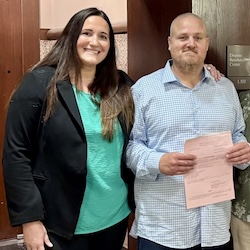
On March 26, 2025, the Texas Court of Criminal Appeals granted the petition, vacated Cobb’s conviction, and ordered a new trial.
On May 6, 2025, the Bexar County District Attorney’s Office dismissed the case. In October 2025, Cobb received $400,000 in state compensation.
– Maurice Possley
Posting Date: 05-15-2025
Last Update Date: 01-29-2026